

Published August 2024 | Updated August 2025
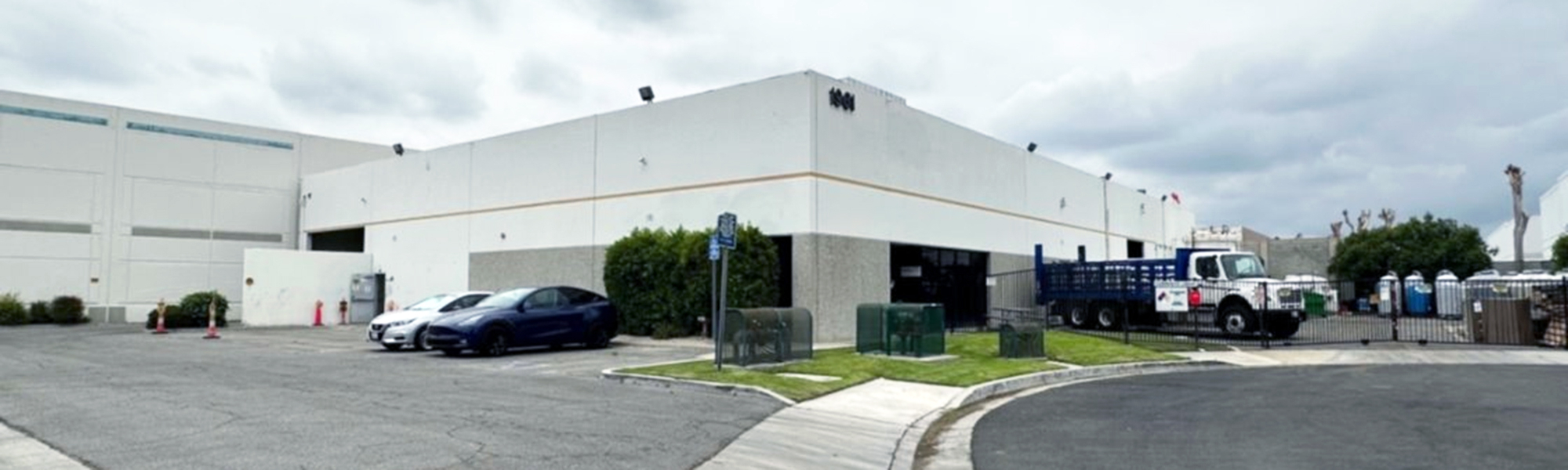
Ecolab’s Placentia, California, Plant
Alliance for Water Stewardship (AWS) Case Study
Insights
As a global leader in water solutions and services, Ecolab remains dedicated to creating a more water secure future through smart water management, conservation and stewardship. By 2030 we plan to achieve a Net Positive Water Impact through:
- Reducing, recycling and replenishing water at operational sites. We aim to reduce water impact by 40% per unit production across our enterprise from a 2018 base year.
- Protecting local watersheds by working to restore greater than 50% of our absolute water withdrawal volume at high-risk sites.
- Delivering outcomes through the Alliance for Water Stewardship (AWS) Standard by achieving AWS certification for Ecolab manufacturing sites located in high-risk watersheds.
Ecolab’s facility located in Placentia, California, is a key contributor to these goals. The Placentia site is a water purity solutions facility focused on resin regeneration and water purification. Located in Southern California, in the San Gabriel sub-basin, the Placentia facility relies on water distributed by water treatment plants that source water from the Colorado River aqueduct and the California aqueduct. Other water sources include local groundwater from Orange County groundwater basin. Wastewater from the Placentia facility is received and treated by the Orange County Sanitation District’s Fountain Valley facility. The treated wastewater is released into the Pacific Ocean.
The Placentia facility was identified as a priority location to pursue AWS certification as well as “to enhance” the site’s smart water management approach and implement innovative technologies to advance enterprise water goals.
Actions
To contribute to Ecolab’s enterprise water goals, the local team’s objective is to reduce annual water use per ton of product by 40% from 2018 to 2030.
The following projects are underway to help improve the facility’s water balance and reduce overall water use across Ecolab’s enterprise:
- Redesign of the waste neutralization system to improve efficiency and safety.
- Redesign of the water heating system that supports the resin regeneration process allowing for additional water reclamation.
- Improvements and refinements to process water use at each stage of the resin regeneration process.
Outcomes
As a result of these actions, the Placentia facility achieved savings in water and energy use. The improvements made at the site have proved to be a helpful step forward for enhancing the site’s operations and advancing Ecolab’s sustainability goals.
To improve the overall health of local watersheds, and as part of Ecolab’s efforts to create 2030 Positive Impact, we have prioritized AWS certification in high-risk watersheds in which we operate.

Good Water
Governance
✓

Sustainable Water
Balance
✓

Good Water
Quality Status
✓

Important Water-Related Areas
✓

Water Sanitation and
Hygiene (Wash)
✓
Water Stewardship Journey
Ecolab is committed to sustainable water use in our facilities and collaboration with other businesses at the local level. In alignment with Ecolab’s commitment to a holistic approach to water management across its facilities, the company decided to pursue the Alliance for Water Stewardship (AWS) International Water Standard at its Placentia facility in 2024.
To identify shared water challenges in the San Gabriel sub-basin, a comprehensive risk assessment was performed leveraging insights from Ecolab® Water Navigator IQ™ and the World Resources Institute (WRI) Aqueduct Atlas to identify shared and site-level water challenges.
Ecolab’s water stewardship approach aims to make a positive impact within our operations and on the water challenges within the communities in which we operate. Primary shared challenges between the plant and relevant, local stakeholders include water scarcity due to reduced snowpack from existing water sources, aging water infrastructure, urban water runoff, water quality, groundwater overdraft, saline intrusion into groundwater and loss of wetlands and species. Additional shared challenges include seismic risk and wildfires. To address the primary shared issues, Ecolab collaborates with other water users in the basin, two of which are AWS-certified Ecolab facilities, one located in Carson, California, and the other in City of Industry (COI), California. In 2024, Placentia joined Carson and COI as the first multi-site AWS certification in the United States.
To effectively address these challenges, Ecolab’s strong water stewardship approach strives for continuous improvement in sustainable site water balance and water quality. Our holistic approach includes a focus on important water related areas (IWRA) and Water Sanitation and Hygiene (WASH), and our continued progress across all these critical areas depends on our strong water governance.
Using Ecolab® Water Navigator IQ™ to quantify the progress made against the five AWS outcomes, the Garyville site is considered Water-Smart on the Water Maturity Curve. The Water Maturity Curve illustrates the quantified state of a site’s water strategy and management plan. A facility’s place on the curve is determined by a set of criteria that includes governance and strategy, target setting, water management practices and water stewardship. The criteria incorporate principles consistent with the five outcomes of the AWS framework, both emphasizing that strong water management includes continuous improvement and collaboration inside and outside the facility’s operations.
sustainable water balance

Sustainable Water Balance
Net Positive Water
A sustainable water balance and smart water management approach within our own operations is a critical component in achieving a localized net positive water impact. Aligned with the enterprise goals, the local team’s objective is to reduce the site’s annual water use per ton of product by 40% from 2018 to 2030. The team at Ecolab’s Placentia plant regularly assesses the facility for opportunities to decrease water use across operations to meet Ecolab’s targets to create 2030 Positive Impact. Implementation of water reduction projects is prioritized based on risk probability and impact to site-level and community stakeholders.
water Quality

Water Quality
Water Quality Approach
To maintain good water quality of both process water and wastewater, internal daily water testing is conducted in addition to third-party wastewater testing every three months. Wastewater is treated with pH neutralization before being discharged to the Orange County Sanitation District’s Foundation Valley Facility. If a spill or water-related issue were to occur, the site has a robust incident response plan that includes a root cause analysis of the original incident, a review by the leadership team, documentation in an internal reporting platform and communication of mitigation strategies during monthly site meetings.
In 2022 and 2023, the Placentia facility received the bronze award and in 2024 the site received the silver award along with recognition in the Orange County Pretreatment Honor Role program. This program recognizes industrial facilities that demonstrate a commitment to positive environmental stewardship efforts.
Water Governance
Water Governance
Water Governance Approach
At the plant level, the plant technician lead is responsible for wastewater testing, wastewater discharge and pH monitoring. The plant manager is responsible for compliance with wastewater permits, and ultimately accountable for overall wastewater compliance, wastewater testing, regulation updates, wastewater discharge and pH monitoring. Site water-related compliance information is available upon request, including necessary corrective action taken by the site to prevent future occurrences. Additionally, Ecolab’s CDP Report discloses any violations and associated corrective actions.
At a corporate level, the corporate sustainability team is guided and advised by the Sustainability Executive Advisory Team (SEAT), which is made up of the company’s most senior business and divisional leaders. In addition, Ecolab’s Sustainability, Water Stewardship and Safety, Health and Environment (SHE) positions are publicly available and serve as commitments to and guidance on water-related issues and compliance. Ecolab’s Sustainability Position formalizes Ecolab’s global commitment to sustainability within the company and its impact on customers. Ecolab’s Water Stewardship Position reinforces Ecolab’s global commitment to responsible water stewardship by identifying opportunities for the company and its customers to use water resources in a manner that benefits business, communities and nature. Ecolab’s SHE Position outlines the company’s commitment to excellence in safety, health and environmental practices and performance across global operations.
Important Water Related Areas (IWRA) // Water, Sanitation and Hygiene (WASH)

Important Water Related Areas (IWRA)
Water, Sanitation and Hygiene (WASH)
Collective Action
In addition to internal operational improvements, Ecolab’s Placentia facility’s external water stewardship activities are ongoing. To address these primary shared water challenges, Ecolab collaborates with other water users in the basin.
The Placentia team collaborates with local water districts including cultivating and maintaining a working relationship with the Yorba Linda Water District, where they regularly discuss shared water challenges, risk mitigation strategies, and initiatives within the catchment.
The Placentia team identified multiple volunteer and outreach events to participate in future years, including a watershed cleanup with the Huntington Beach Wetlands Conservancy. The Huntington Beach Wetlands are one of our identified IWRAs. A member of the Placentia team took part in a cleanup event.
The regional Ecolab Foundation Nonprofit Grant Program, coordinated by the COI facility, has supported local nonprofits aligned with the focus areas of the Ecolab Foundation: Youth & Education, Civic & Community Development (basic needs: food, housing, workforce development), Environment & Conservation and Arts & Culture.
18% of the granted funds supported Environment & Conservation nonprofits. This included organizations like Orange County Coastkeeper, which runs the WHALES program—Watershed Heroes: Actions Linking Education to Stewardship. The program provides hands-on environmental education to underserved junior high and high school students in Orange County. Another recipient was TreePeople, which focuses on expanding the tree canopy in historically underserved communities across Greater Los Angeles and the Inland Empire. Their efforts involve strategic tree planting, community engagement, education, local hiring, and long-term maintenance using industry-approved arboriculture practices. Additional grants were awarded to stakeholder groups such as the Boys and Girls Clubs, the Food Bank of Southern California, and Project Scientist.
Ecolab continues our work as a founding member of the Water Resilience Coalition (WRC). Ecolab stepped forward as the Basin Champion for one of the WRC's priority basins: California—containing our site's catchment. As Basin Champion, Ecolab convened corporations, nonprofits, and governmental bodies to launch the California Water Resilience Initiative (CWRI). In line with California's Water Supply Strategy, this initiative aims to shore up and advance efforts to close the projected water supply deficit in the state through public-private partnerships. Since its launch, Ecolab and other leaders of the initiative have begun building a roadmap of high-impact projects in need of corporate investment and engagement to reduce, reuse, and replenish water in the region. The CWRI aims to serve as a leading example of how corporations can help California reach its water goals. Through this important initiative, Ecolab is partnering across sectors to promote resiliency for communities, the economy, and ecosystems.
Ecolab supported the Esperanza Elementary School Project through the California Water Resilience Initiative (CWRI), with funding provided by the Ecolab Foundation. The project is a public-private partnership that strategically aligns community impact with volumetric water benefits for our business. The grant is to the Los Angeles Land Trust to support the Esperanza Elementary School Project in the Westlake neighborhood in Central L.A., a dense and disadvantaged area of the city. The project will convert 33,310 square feet of paved area into green space with native plants and trees, including bioswales. This will help reduce runoff, improving water quality benefits and reducing flood risk.
Multiple water replenishment projects that impact the Southwest United States were funded and executed across Ecolab. These replenishment projects, such as the Colorado River Indian Tribes (CRIT) System Conservation Project, allow Ecolab to collaborate with other stakeholders to reduce the impact and severity of water shortage declarations of our catchment's primary water sources.
Ecolab is involved in the California Water Action Collaborative (CWAC) and is also part of the South Coast working group (within CWAC). The Ecolab team participates in monthly meetings to keep pace on shared water challenges and efforts in California. Ecolab is actively seeking collective action projects in the region that align with corporate replenishment goals.
Ecolab is a member of a public policy water resources group in Washington, D.C., that advocates for water resource policy with a heavy focus on California. Ecolab continues to engage with and support the Alliance for Water Stewardship’s global work by sharing the company’s water stewardship strategy through multiple speaking engagements, AWS webinars and encouraging other large multinational corporations to join AWS.
On top of local water stewardship efforts, Ecolab’s global giving program, Solutions for Life, enhances the company’s mission to conserve and protect fresh water through partnerships and additional projects with The Nature Conservancy and the Project WET Foundation.
This case study was created to comply with AWS indicators 5.1.1, 5.2.1, 5.3.1. 5.4.1, 5.4.2, 5.5.1, 5.5.2 and 5.5.3. For more information, please contact sustainability@ecolab.com.